Keratoconus is a progressive eye condition that causes the cornea—the clear front surface of the eye—to thin and bulge into a cone-like shape. This irregular shape prevents light from focusing properly, leading to blurred and distorted vision that cannot be fully corrected with glasses alone.
For many patients, keratoconus can be frustrating because vision continues to change over time, and traditional contact lenses may become uncomfortable or ineffective.
At EYE Invision in Orlando, we specialize in diagnosing and managing keratoconus using advanced treatment options such as scleral lenses.
What Causes Keratoconus?
The exact cause of keratoconus is not fully understood, but several factors may contribute:
-
Genetic predisposition
-
Eye rubbing
-
Underlying conditions such as allergies
-
Weakening of corneal collagen
Keratoconus often begins in the teenage years or early adulthood and may progress for several years before stabilizing.
Common Symptoms of Keratoconus
Patients with keratoconus often experience:
-
Blurry or distorted vision
-
Increased sensitivity to light
-
Glare and halos, especially at night
-
Frequent changes in glasses prescription
-
Difficulty seeing clearly even with correction
As the condition progresses, these symptoms can significantly affect daily activities such as driving and reading.
How Is Keratoconus Treated?
Treatment depends on the severity of the condition.
Early stages:
-
Glasses or soft contact lenses may help
Moderate to advanced stages:
-
Specialty contact lenses are often required
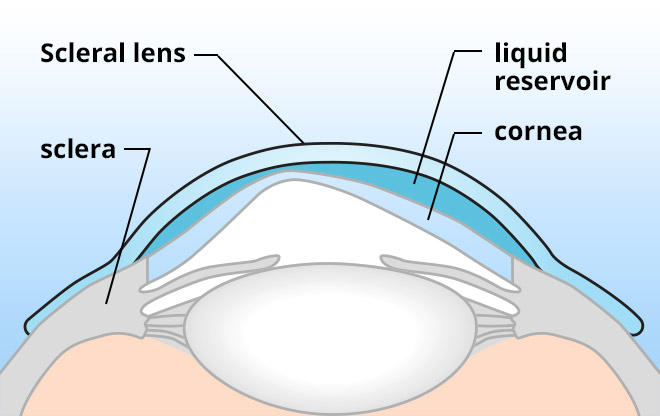
The most effective option for many patients is scleral lenses, which provide a smooth optical surface over the irregular cornea.
Why Scleral Lenses Work So Well
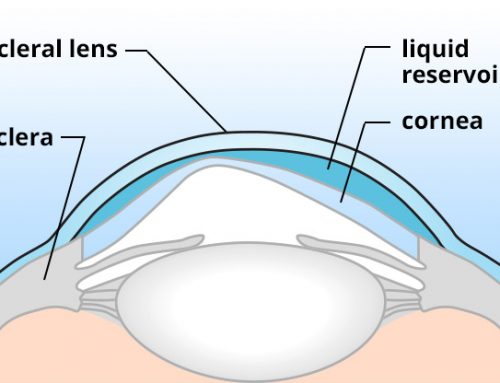
Scleral lenses are larger than traditional contact lenses and rest on the white part of the eye (the sclera), vaulting over the cornea.
This design:
-
Creates a smooth optical surface
-
Improves vision clarity
-
Reduces glare and distortion
-
Provides greater comfort
Many patients who could not tolerate traditional lenses find scleral lenses life-changing.
When Should You See a Specialist?
If you have been diagnosed with keratoconus or are experiencing symptoms that are not improving with glasses, it’s important to see a provider experienced in specialty contact lenses.
At EYE Invision, we offer advanced scleral lens fittings designed specifically for patients with keratoconus and irregular corneas.
Final Thoughts
Keratoconus can significantly affect your vision, but with the right treatment, many patients achieve excellent visual outcomes.
If you are struggling with blurry or distorted vision, specialty contact lenses may provide the clarity and comfort you’ve been looking for.